Uncategorized

Cologne

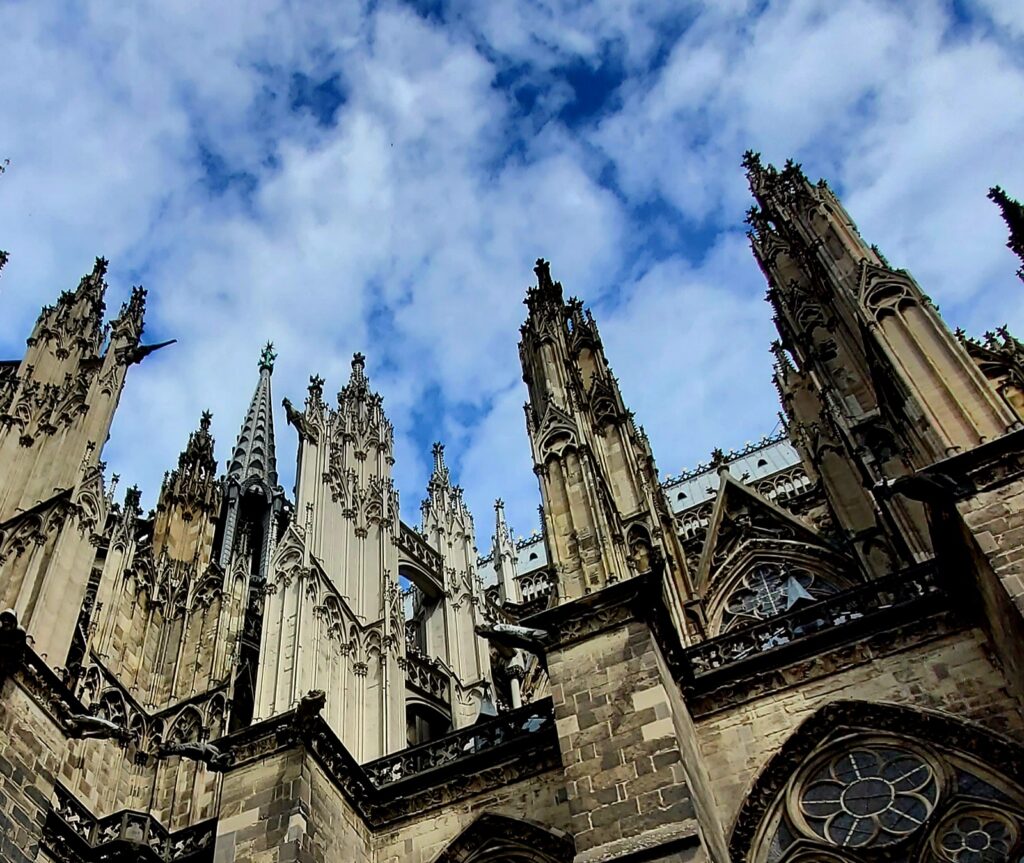
Travel Tales Excerpt – Odo’s Cologne “I have sampled Farina’s fragrance, and it has elements that I do not recognize. He was Italian, you know.” Odo began. “Italians have all sorts of exotic fruits and vegetables. His product is not perfect, but before I can make perfection, I must have the recipe.” “Many have tried, master.” Jobst started. “It cannot be bought, and the formula is hidden. Even the workers do not know it. The current Farina mixes the portions in secret and then pours it into the vats himself or has his eldest son do it.” “Ah! The son!” Odo exclaimed. “Is he married?” “I do not know, master,” Jobst answered in a worried voice. Jobst always got scared and defensive when he could be the man with all his answers. “But why does a wife matter?” “You are right, Jobst. It does not. A beautiful woman can always sway a man. That is what we will use. Find me the most beautiful woman in the area, one who can be bought.” Odo smiled a prideful little smile. – End Excerpt Cologne, Germany, was a surprise for me. When I hear “cologne,” I think of the French aromatic liquid called perfume. Indeed, Cologne briefly was a French town during the era of Napoleon, but it was a German city, and the residents today say it was always a German city. Oddly enough, the product’s namesake cologne became famous because of Italian-born Giovanni Maria Farina (Germanized name: Johann Maria Farina), who settled in Cologne in 1709. Believing that the local water was the best base for his fragrance, he named his first product Eau de Cologne to honor the town he called home. It was the first time somebody had created such a perfume product, and it became very popular when there were no product protection laws. Farina gave his product a French name purely for marketing purposes because the French language was spoken across Europe in “high society.” Soon, there were many counterfeits, fake products, and variations of his formula, though he kept his formula secret. This brief history became the basis for the Moliere-like short comedy story I wrote. Molière, whose real name was Jean-Baptiste Poquelin, was an author and playwright who lived in the 1600s and wrote many comedies, faces, and tragicomedies. Many attempts were made to steal the Farina formula or develop competing products. This ruthlessly competitive business became the foundation of my short story. Today, Cologne has many sites, like its Mustard Museum, Chocolate Museum, and several museums on perfumes and colognes, including the Farina Museum. The city also has several gorgeous cathedrals, though its most famous is near the river. Photos of both inside and outside the cathedral are posted here. Lastly, Cologne was founded as a Roman city, and there are remnants several blocks from the Cologne Cathedral, and photos have been included. Like many European cities, Cologne is walkable, though there are tourist trams, bicycle taxis, and other transport. There are also many taverns, cafes, and restaurants, all serving wonderful meals.
Cologne Read More »

Nuremburg

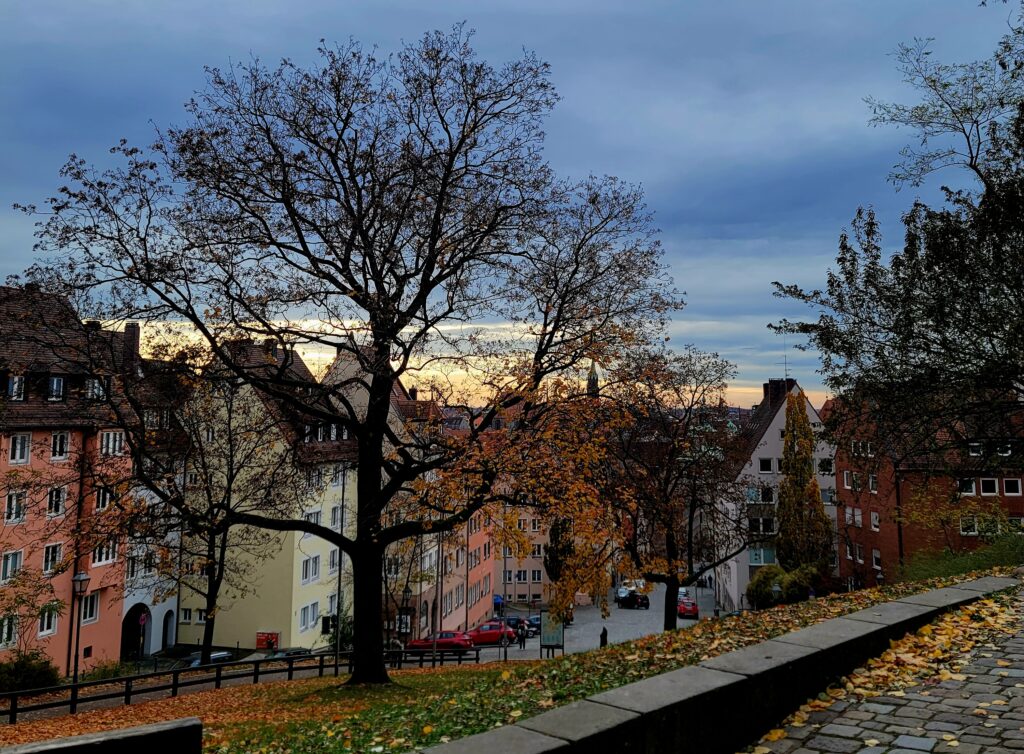
Travel Tales Excerpt – Born in Nuremberg One evening in late 1963, Michael and his best friend, Eurich, were listening to the radio. The world was on another precipice as Russia and The United States were at odds over missiles in Cuba and Turkey. It was a time when the attitude of “What have we got to lose?” was growing. There was talk of building bomb shelters to survive or taking once-in-a-lifetime chances by staying above ground. “You know, there are tunnels under the castle,” Michael began one evening as he talked with Eurich. “There is the talk of making them shelters again. Have you been there?” “No, no one has been there. They are closed.” Eurich responded. “Well, yeah, but I know a way to get in them. What have we got to lose?” Michael smiled. Eurich considered the idea and then nodded in agreement. They grabbed some bread and cheese, some flashlights, and some canteens of water. The tunnels’ entrances were sealed and locked, but there were air vents and other ways like cracks in floors and walls, damaged medieval gated sewer drains, and such. Michael went to an air vent system that he thought might work. The vent was lower than the castle, and Michael presumed it would be a straight crawl to the tunnels. They loosened the cover, pried it open, and wormed and wiggled their way into it. – End Excerpt My short story, set in Nuremberg, Germany, is a tribute to my tour guide in that city. He was such a good man, and his mannerisms were gentle and kind. He had experienced a tough childhood growing up in post-World War II Nuremberg, and he shared his stories in equal portions as he explained each site our tour group visited. He had a resilience of spirit that rivaled Nuremberg’s toughness. He was not just a survivor; he achieved a state in life where he knew what was necessary. He loved history and its preservation. He never told us a story that he had been trapped in the bunkers and tunnels. That was pure fiction on my part. However, I would not be surprised if he had done what I had written. Like the city itself, he had layers and depth to him. He loved his mother, which was evident in how he referred to her. He loved to explore and tell stories, which was easy to experience because he took his listeners through a wide range of emotions but always brought the listener to the same emotional spot. He never glossed over the crimes of the Nazis, yet he was equally critical of the Austrians, the Americans, the British, and anyone or any culture that got too arrogant or too entitled. The tunnel story is transformational. One enters innocent and exits transformed into a wiser person. It is also a story about survival by wits and personal spirit and not to play the victim. I wish my tour guide well in life.

Nuremburg Read More »

Würzburg

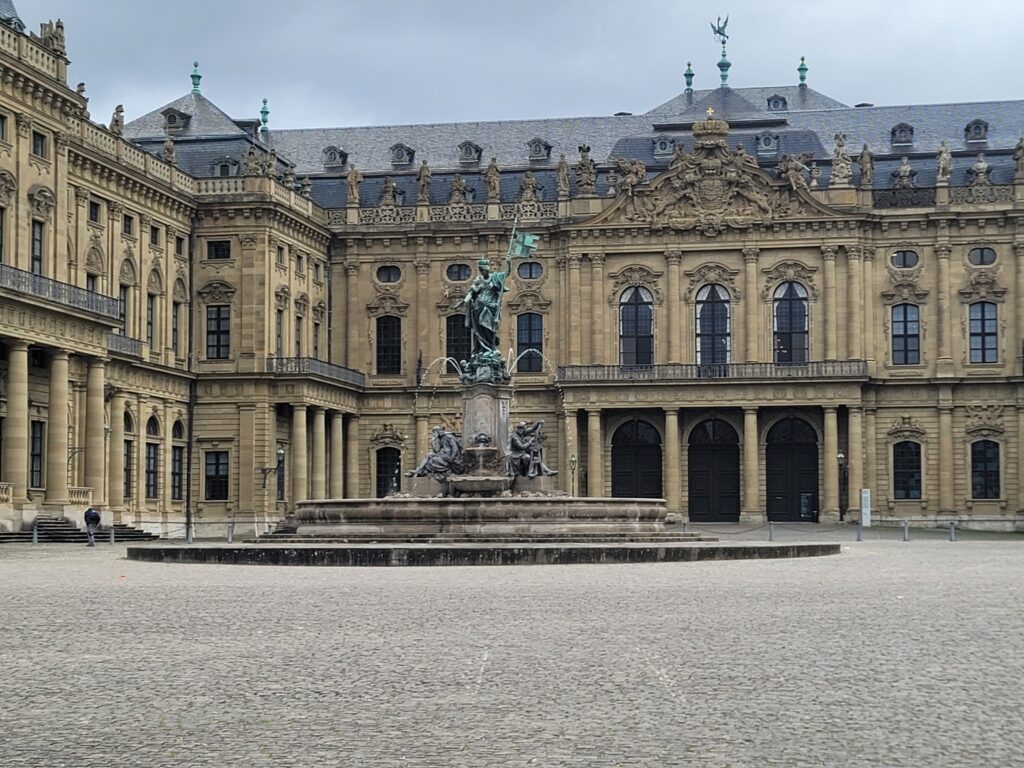
Travel Tales Excerpt – Lumber of Love in Würzburg It was here that the unstoppable Skilton met an unmovable German local in the form of Johan’s father, Fritz. The two men were opposites in many ways. Skilton was thin, and Fritz was stocky. Skilton smiled and had genuine charm, while Fritz was implacable and seemed bored and stoic. Fritz’s voice was deeper than Skilton’s voice, and Fritz had a bored quality to his tone, whereas Skilton’s voice betrayed his mood. “We will pay you good money,” Skilton began his offer. Skilton had morals and started his negotiations on an honest footing. “What good is money?” Fritz countered. He was a man in his forties with several children, including the youngest, Johan. Fritz had seen two wars, been in both, and survived combat many times, and now saw that he and his people were again on the losing side of war. “Money is worthless. Each day, the price of items goes up. There is no work, no market, no economy, and as far as I can see, there is no future except to either learn English or Russian.” – End Excerpt The Würzburg Residence, or the Residenz, was a fantastic palace because of its architecture and the efforts to save and restore it after World War II. The main entrance drew me into the palace, and the walls to the side surrounded me long before I got to the main entrance. It felt like the building was hugging me in greeting. I saw a series of stone statues and an intricate floor and wall design as I entered the building. Ascending the first set of stairs, my fellow tour group members and I beheld the giant Fresco of the Four Continents by Venetian painter Giovanni Battista Tiepolo. Seeing it is breathtaking, and I hope my photos do it justice. There is so much detail in the painting that we hovered around it for 30 minutes and still felt rushed. I could have spent just a day admiring the ceiling fresco artwork. That ceiling fresco saved the building after its destruction. The roof had been destroyed, but the fresco was unharmed and suspended in the air, exposed to the elements. When he saw it, Major John Davis Skilton realized the importance of the artwork and lobbied hard to save the building, not just the fresco. There is an exhibit that talks about Major Skilton. While he was not in the movie, ‘The Monuments Men,” I learned he did much of that effort. It dawned on me that enormous amounts of lumber were needed to rebuild the Residenz, and having seen the movie and then researched Major Skilton’s efforts, I dreamed up the lumber story. Major Skilton’s efforts are fodder for a whole book, and a book has been written about him. For a short story, the efforts to get lumber provided enough material.

Würzburg Read More »

Vienna

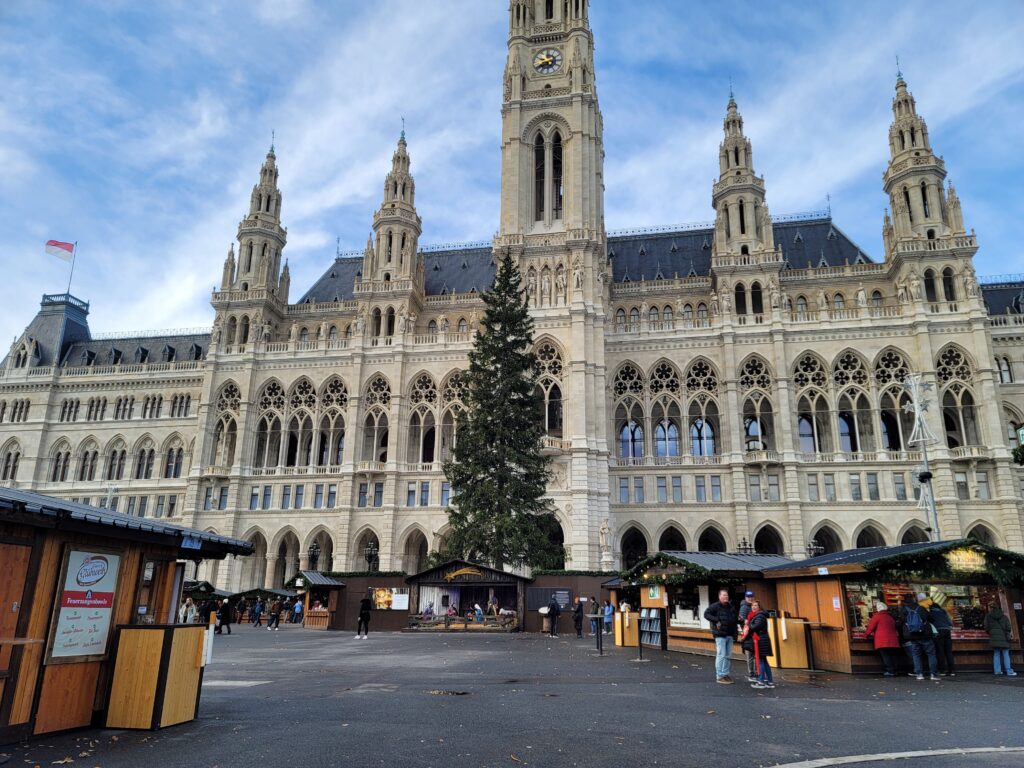
Travel Tales Excerpt – A Spy Waltz in Vienna It took some time to get past the US guards and security staff. Evidently, a lost passport is a common nuisance that no one wants to address. It was only when George gave his cover name that the embassy staff took notice. Not that the staff’s attitude changed, but at least they were no longer waiting or being ignored. To the dismay and disgust of others in the waiting area, Randy and George were quickly ushered to an office that was out of view from passersby. The room was nondescript and only had a table, some bare wooden chairs, a US flag in the corner, and a smiling picture of President Reagan on the wall. They waited there for a few minutes until a man and woman dressed in formal suits entered the room. Uncertain how to proceed, George used the cover names to introduce himself and started with the explanation of the lost passport when he was interrupted by the man in the suit. “No need, Messrs. Amenguale and Mak, we know why you are here. This is a secure room. I am Mr. Brown, and this is Ms. Grey.” Brown began. “They are not our real names, but let’s just go with the flow. We have a situation that needs your expertise. We have gotten word through the Spanish agents that someone is trying to sell the plans of the new Ticonderoga class ship, specifically the communications and electronic warfare systems. The seller claims to have spent time on the ship. We need you to check it out and validate or refute this claim.” – End Excerpt Vienna is elegance. Vienna is culture. Vienne is art. Vienna is food. Vienna is a city for everyone. It was hard to decide what story to write, but I knew I had to write one set in Vienna. I visited Vienna in the 1970s, but in 2023, it changed dramatically. What had not changed was its reputation as a city for spies. A good spy story requires a whole book, which is incompatible with an anthology of short stories. Fortunately, I had been lucky in life when, several years ago, a former supervisor shared a spy story his buddy had experienced in the navy somewhere in Asia. The setting for my story was different, and the nature of the incident was different, but it helped me find a way to make a short spy story. Vienna was the perfect place because of the city’s layout and density of shops, stores, cathedrals, museums, pubs, and restaurants, and all its narrow streets and alleys are perfect for a spy thriller. That is probably why so many movies refer to it and use it. In intelligence and espionage, everything is researched, all possibilities considered, and all activities choreographed. Every action has layers of complexity. It is a ballroom dance of events. Surprises are not good. There is always a risk of failure, so it is not a career for amateurs. I considered every place I saw and every spot I stopped for my short story. Next to the Krems story, Vienna was the most complex story to develop. I hope you enjoy the story as much as I did writing it.

Vienna Read More »

Krems

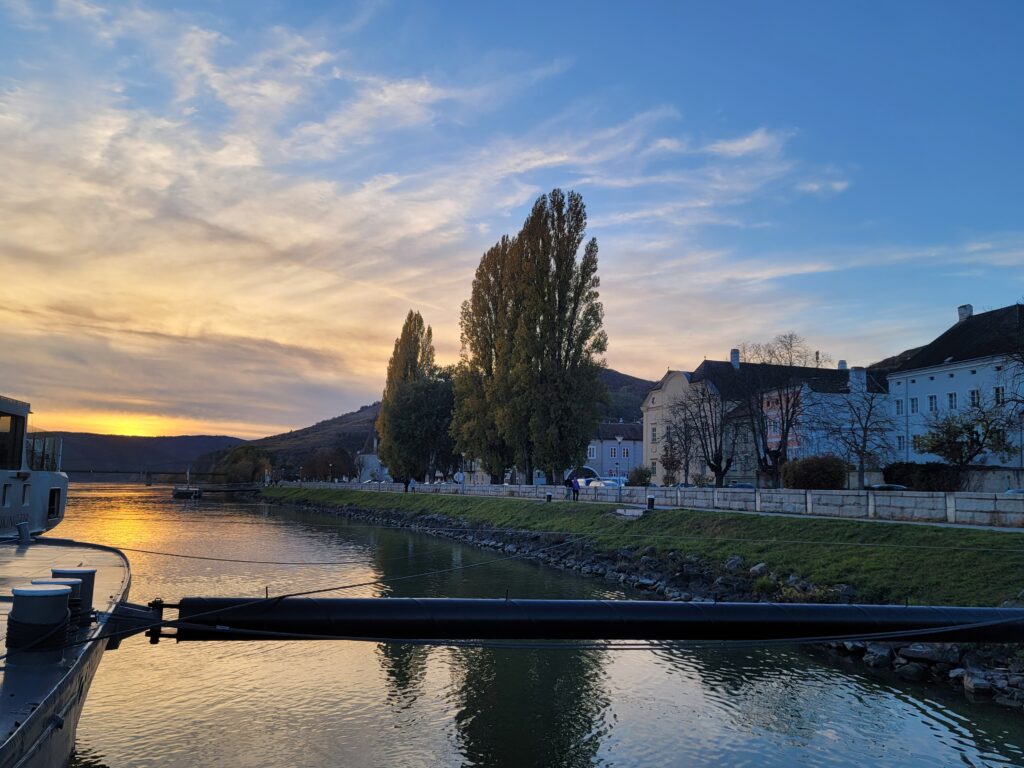
Travel Tales Excerpt – Karma in Krems “Now that you have heard that long oration, I will pick it up and speed it along,” Margaret stated. “Honestly, the way you tell stories.” “The context and details are the basis for the story,” Nikolay replied defensively. “Well, now he has a doctorate. If you do not mind, I will finish the story.” Margaret declared. “In the 1960s and 1970s, when each of us was growing up in our respective birthplaces, the education system stressed learning lessons from the past. Military service was required of the men, and women had an option to join.” She paused and took a sip of her drink. “For all of us, the world was rebuilding, and we wanted to see the end results. We each had joined a special section of our respective government.” Margaret continued, “So each of us ended up in a ministry of security and antiquities repossession.” “Almost all of us,” Amadeus added. “Some of us pursued that line of work as private citizens.” – End Excerpt Krems was a surprise visit, and as I write in the short story, our dinner visit to a nearby abbey (not Melk) had been canceled. We had just visited Melk Abbey, and it was getting dark, so our options were to stay on a ship docked on the Danube River or tour solo. I will take the tour solo any day. Technically, I only saw the Stein part of Krems, but it was very charming. It was another peaceful place where I might consider living. As I wandered the streets and peeked inside a church, I could see the town had style and history. Then, to my surprise, I came upon two restaurants with strong marketing references to two literary and cinematic legends. I suspected that at least two other non-Krems residents had made the choice to settle there. I regret not getting the pizza at Corleone’s, but the November evening was freezing. I was not sure the pizza could be made in time to return to the ship, and it was a cold 20-minute walk back. Both restaurants looked excellent. The charms of Stein and Krems had similarly done their work to Koblenz. They had captured my imagination. It took a while to construct a story with believable characters. The movie “The Monuments Men” was released on the ship’s entertainment system. They provided an ingredient for my story. I wanted a variety of characters but also a balance of genders. Dame Maggie Smith has always been a favorite; long before her Downton Abbey role, I needed a character to push a short story. If I can revisit Koblenz and Melk, I would extend the tour and add Krems. It has a fascinating story, and I suspect that, like Koblenz, it is a fun town that has been kept a local secret.

Krems Read More »

Melk Abbey

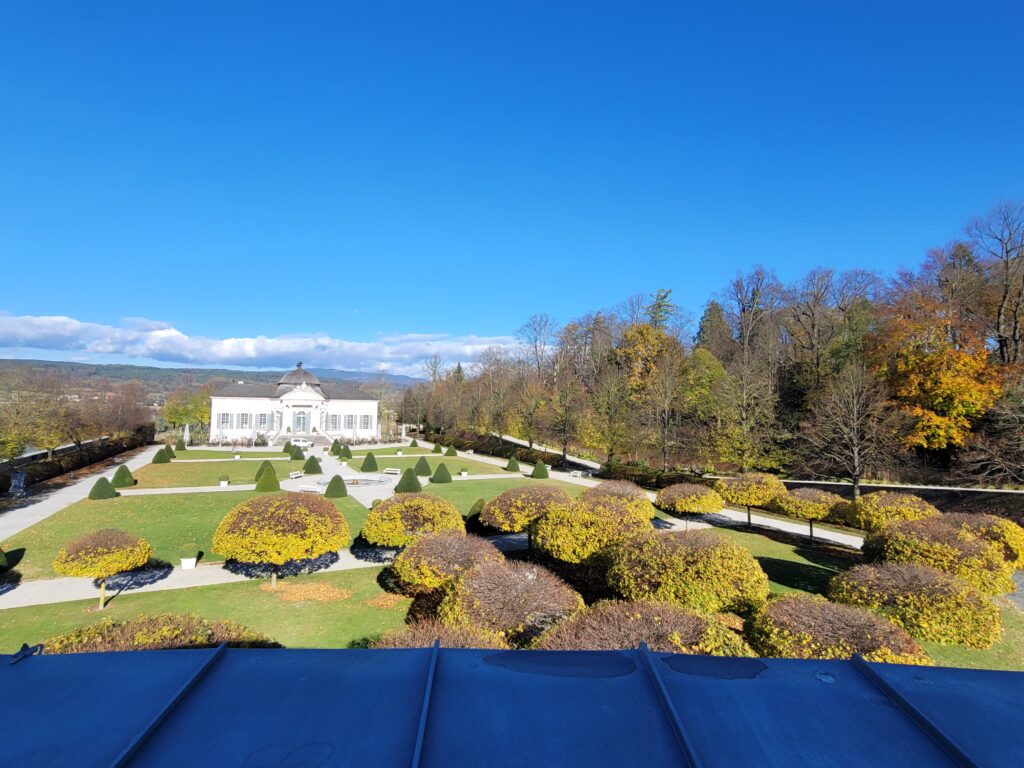
Travel Tales Excerpt – Miracle in Melk Dr. Thompson said nothing. He just moved his mouth and made a clicking noise once. He looked at the documents and then looked back at Athanasis. “It is not a joke, Sir,” Athanasis said defensively. “I am Greek and can read them. They describe the same symptoms that we are seeing. You see this word, ἰός (iós)? It means poison. All of these documents are from an old group called the Asclepieia. Similar to your caduceus, which is the staff with two snakes, this symbol here is the staff of Asclepius, the ancient Greek god who would ask snakes to come to him in his dreams and tell him what ailed people. The Asclepieia were his followers, and they made medical schools and hospitals and conducted research.” “I am not following you,” Thompson stated. “These documents describe an illness that is similar to what we are seeing now. See this scrap of paper with a note on it? It is in German. See the date 1702? Well, there had been an invasion in 1683 by the Turks, which caused severe damage to the abbey. The invaders brought the virus with them, and people started getting sick. The monks here must have found this text and developed a recipe using local herbs and plants.” – End Excerpt Our stop at the Melk Abbey was very brief, just a few hours. I had heard of it prior to the tour and was very excited to see it. Our ship truly glided into its docking station on that glorious sunny day, the first we had experienced since boarding over a week ago. The sky was blue and cloudless, and the sun bright, providing a breathtaking view of the abbey. The famous and talented Italian author Umberto Eco briefly referenced Melk in his novel, “The Name of the Rose.” While I enjoy a good murder mystery, I am a public health professional, and there are other ways to have an abbey as the backdrop for a story. So, having the abbey is pivotal in addressing a healthcare emergency. During this cruise, humanity exited the COVID-19 pandemic, which inspired my historical fiction story. Prison camps had disease outbreaks during World War II; these elements became my short story’s ingredients.  As in the story, our ship’s activities director was very serious about no pictures inside the abbey. Most of these pictures are of the abbey’s exterior, some panoramic views, and a few of the town itself.I could have spent months in the abbey or even resigned everything and gone to work there. From medieval times through the Renaissance, the Melk Abbey was known as an academic center for knowledge and its preservation. Unfortunately, the staff was very watchful in the libraries and exhibits, so they enforced the no-photography rules. Only in the Abbey Church of Melk was I able to sneak some photographs. Two of the photographs include the jewel-encrusted skeletal remains known as the Catacomb Saint Friedrich and the Catacomb Saint Clemens. They were odd items to see, and I could not figure out how to include them in the story. While the wonders of the abbey’s inside are a challenge to photograph, its exterior was a challenge to decide which pictures should be used. It is a gorgeous place, especially in autumn. My bucket list of places to see in life included Melk Abbey, and I was happy and sad to check that item. However, I did celebrate by having an apple strudel at the Stiftsrestaurant Melk near the abbey. Our tour guide said it was the second best he had ever had, next to the one our ship’s chef prepares. Since I have had both, I would agree.

Melk Abbey Read More »

Prague

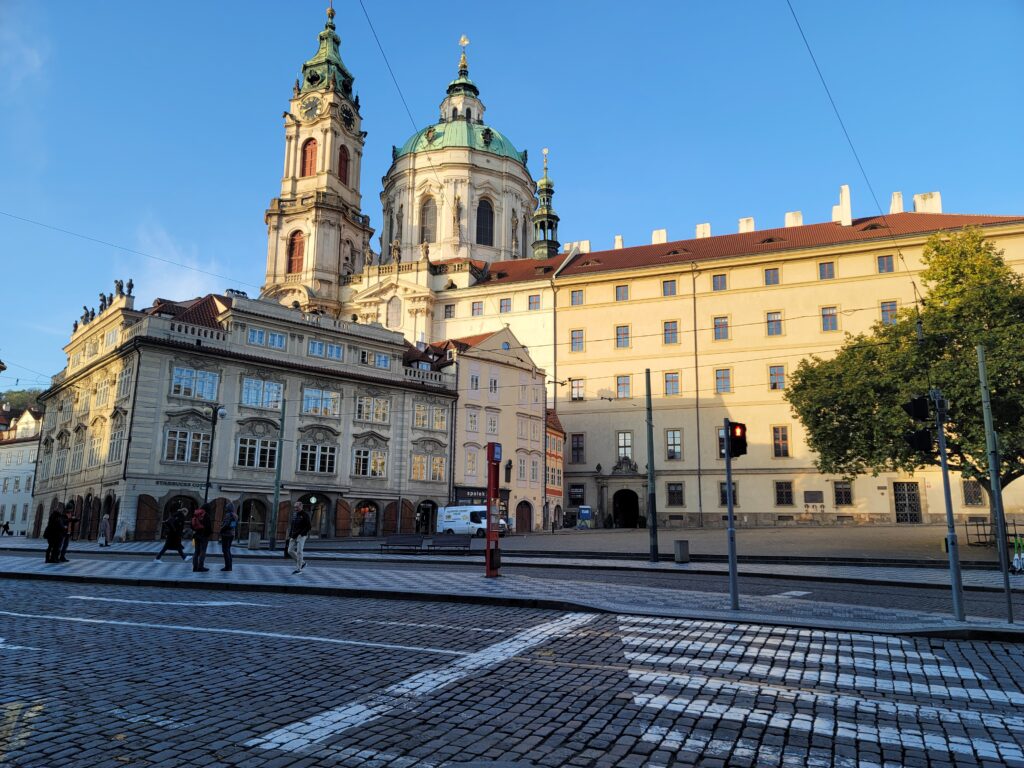
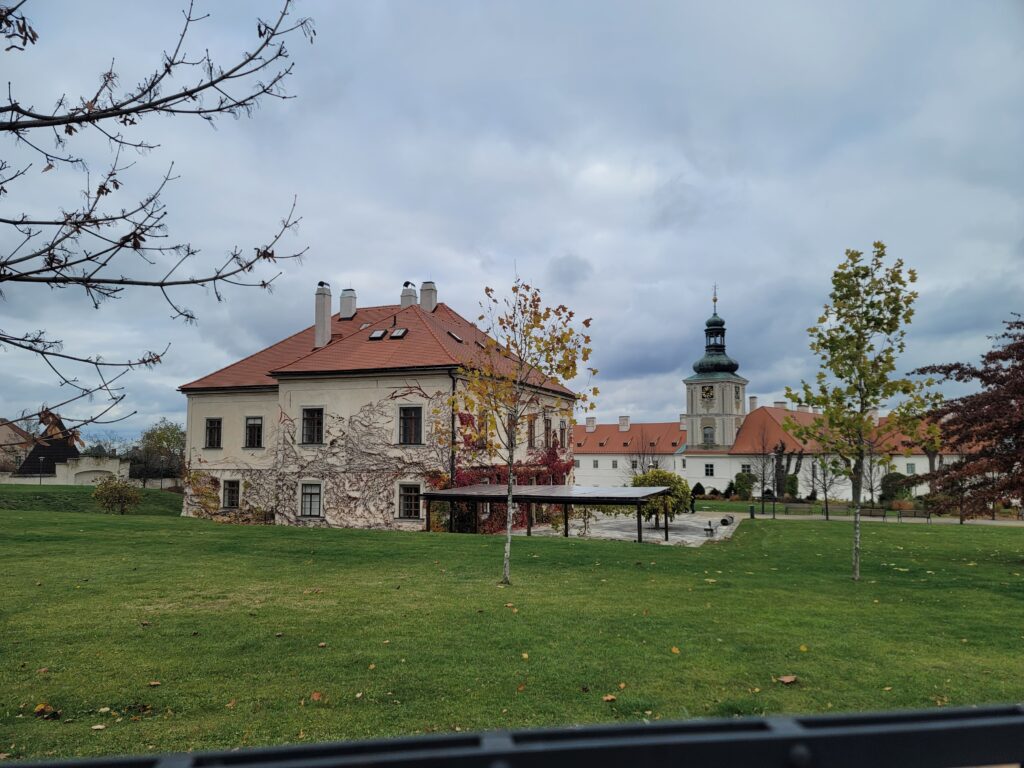
Travel Tales Excerpt – Party in Prague The Duty officer and some subordinates chuckled as they eavesdropped. “This is all your fault!” Sarah accused. “My fault? You knew what you were doing!” Gary responded. “That doesn’t matter,” Sarah countered. “You had the car. You drove us around.” “You jumped in the car and asked for the tour!” Gary exclaimed. “That doesn’t matter!” Sarah’s voice rose. “You should know better than to drive under the influence.” “That is the problem of being under the influence; you have no good judgment!” Gary retorted. “Besides, you could have asked to stop the car and get out. Instead, you wanted to come to Prague Castle!” “That does not matter!” Sarah replied sharply and then paused. “They are probably going to kick us out of the country or send us to jail. – End Excerpt If you are you looking at my photos on Prague, then there is just one fact you need to know. I like Prague! It is exciting! As a city, Prague is alive and full of culture, great art, good food, natural beauty, and it is in harmony with nature. The people were warm and friendly. It is a busy city, but it does not tower over you like other larger cities. Prague and the Czech Republic no longer have communism as their government.  I have been to communist cities in Poland and Bulgaria in the 1970s and 1980s; they were nice, but there was grittiness to them. Similar cities like England, and Germany today have a post-industrial grittiness that can be seen on building and streets where decades of soot had stained everything.  This was not the case with Prague. When Prague washed away its communism, they washed and cleaned the buildings and streets.  It is a busy city, but it is also a well-cared for city. My pictures speak louder and better than any praise I could write.

Prague Read More »

Kutna Hora

Travel Tales Excerpt – Courage in the Ossuary of Kutná Hora Contrary to reputation, the chapel and ossuary were not made of human bones. Human bones had been used to decorate the interior along the walls and arches. Skulls with bones in their dead mouths were arranged into steeples, and overhead, hung a chandelier created with jaw-less human skulls, femurs, and pelvic bones. Along the stone arches, jawless skulls and femurs were hung like garlands. In small alcoves, human bones were carefully arranged by type and neatly stacked behind locked gates. Eight-foot shields with bones arranged in a coat of arms pattern adorned the walls and these alcoves. The floor was made with grey and dull red stones in a hexagonal pattern. The place was dark. It had been wired for electricity, but the lights were off. Using their flashlights, they scanned the area. The shadows made the place creepy, and as they moved their light beams, the shadows stretched and changed, giving the illusion of animation. No living person appeared to be inside. Gabriela walked around and searched for a light switch. Alex had walked inside and in a different direction to confirm that the place was indeed empty. It was November, but the cloudy day had provided no solar heat, and being a few feet underground, the interior felt colder than the outside. “Don’t,” Alex cautioned in a whisper as Gabriela had stopped at what appeared to be a light switch and was about to activate the lights. “Why not?” she asked in a normal voice. Her hand was still going for the light switch. “Technically, we are not supposed to be here. The lights will announce our presence.” He whispered quickly, but it was too late as Gabriela flicked the switch. It gave a cold click, and the sound echoed, but the place remained dark. “ – End Excerpt Kutna Hora in the Czech Republic was my last full tour day of what had been a thoroughly enjoyable river cruise. While the town’s claim to fame is its bone ossuary, as described in the book, it found its wealth in silver mining and other endeavors. It was an old town, and its residents’ view of death was enlightening. The tour was also our last ABC tour (Another Bloody Cathedral, to quote our ship’s tour director), and St Barbara’s was the perfect previous cathedral tour. It is big and has a fabulous interior that was especially fun to experience because it was not crowded. We left the cathedral and walked past through the Galerie Soch, of which I have included some photographs. Of course, the tour’s main goal was the town’s bone ossuary. I could only take a few pictures inside, which were not very good. The ossuary has many attendant watchers who approach you the moment your camera or mobile phone is visible. Out of respect and because I had no desire to sit in a police jail, I behaved. I did take a few pictures of some informational plaques that show some of the bone ornamentation. It is very emotional to see it all. Bunting ribbons and banners are made from human bones hanging from the ceiling and along arches. There are small towers and pedestals made of human skulls. There were several coats of arms made with human skeletal remains. During the second week of November, the ossuary was frightfully cold, and there were no chairs upon which one could sit. I had heard that the ossuary was a tourist attraction in the post-communist Czech Republic. In the communist days, it was a local cultural place of interest that served a religious purpose. Having been to many medieval towns and small abandoned villages in Europe and South America, there is always some local custom of showing bravery at a young age. That was my inspiration source for the eleventh story in my anthology. I enjoyed writing the first ten stories but wanted one more because eleven is better than ten.

Kutna Hora Read More »

Ypres Town

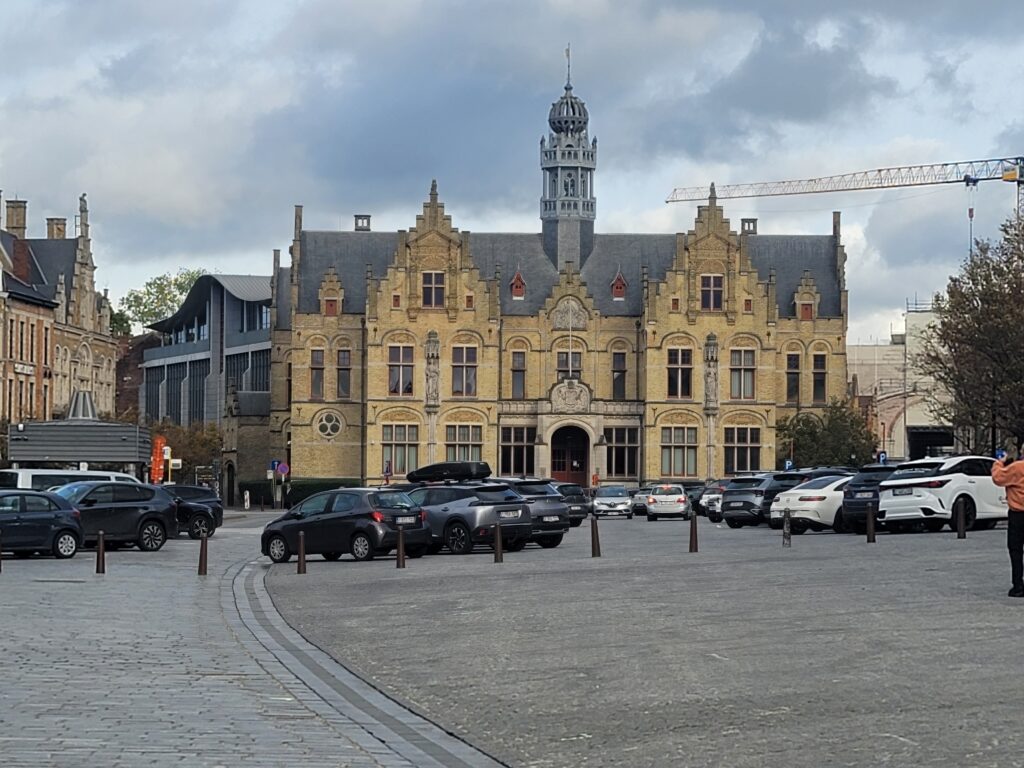
Travel Tales Excerpt – Mining Savagery in Ypres The thudding sound ahead of them continued and turned into a sharp crack as whatever digging tools had breached the earth had now exposed the tunnel. The breach brought dim light behind it, indicating that another tunnel team had intersected and crossed Boston’s tunnel. There was a pause in the digging and a few hesitant strikes and probes at the exposure. Boston could see a shadow hand reach through the hole. It was covered in dirt. Henri and Boston held their breaths. Slowly, Boston held up a shovel full of dirt in front of the probing hand. The mound in the shovel was large and heavy, but Boston held it steady. His goal was to block the view of the intruder and fool him into thinking that he had found an air pocket. Henri silently took his shovel and flipped it so that its round back was upward, resembling a bombshell, and held it next to Boston’s shovel of dirt. The foreign hand touched the dirt and then touched the metal. There was a voiced exclamation on the other side, a German voice. The next few minutes would live as an unforgettable memory for Boston. The German soldiers had not been fooled, but their hesitancy had benefitted Boston and Henri. Boston dropped his shovel, grabbed the arm, and pulled its owner toward him. The German cried out something in German that sounded like, “Alarm!” as he was pulled forward. – End Excerpt Ypres and Flanders Field American Cemetery are two places that will forever live in my mind. Both places showed dignity and respect far more easily felt by those who sacrificed themselves than any other places I have ever visited. Both places were destroyed during the First World War. While they had been restored and manicured to near perfection, there was daily evidence of care and respect. The first stop of the day visit was Flanders Field, the town of Waregem, Belgium, which has the only permanent American World War I cemetery in Belgium. Nearby are a few preserved bunkers and foxholes. In the center of the cemetery is an octagonal-shaped chapel. It is simple in design and ornamentation, but its presence and the established mood are elegantly respectful. The only places where I felt something similar were Washington, DC, at the Vietnam Memorial and the Korean War Memorial, and only at night. Ypres is a nearby town in Belgium that is historically elegant yet has a freshly constructed feeling. That is because it was rebuilt right after World War I. In 1919, Ypres was completely destroyed. The restoration councils and national committees had plans to rebuild a modern town, while England’s Winston Churchill was lobbying hard to keep the town in ruins as a more prominent memorial. Our tour guide told us that the surviving townsfolk rejected both plans and wanted their town rebuilt as it was before the war. In the end, the town won. How the residents managed to get their way is a mystery to me, but tenacity of spirit was the primary factor. That tenacity and/or stubbornness is evident every night at the Menin Gate Memorial to the Missing. Since 1929, every night at precisely eight o’clock, all traffic is halted while a brief ceremony called the “Last Post” is sounded beneath the gate by the buglers of the Last Post Association in honor of the memory of soldiers who fought and died there. I attended the ceremony, and a poem is read by anyone who is currently military or retired military.  The ceremony has been conducted non-stop since 1929, except during World War II when the occupying Germans prohibited the activity. It was resumed again on September 6, 1944, the first evening of the town’s liberation. That generations of people have cared for a cemetery and preserved a nightly ceremony as a tradition was a profound testimony of the respect and dignity humans can give.Sadly, my visit to Ypres only lasted for a few hours, but its shops, especially its chocolate shops and other shops and restaurants, looked very inviting. There is a World War I museum that is very educational, but after the museum, when I spoke with one shop owner, he told me that there is far more to the town and that I would be a better person to come back for a week. I believe him, and I will return.

Ypres Town Read More »